
By Christy Cox
You hired people to take work off your plate. So why are you still the one checking whether the invoice went out?
The job is done. The customer is happy. But nobody moved it to billing or asked for feedback until you followed up. By Friday, you’ve spent half the week chasing work you thought you’d already handed off.
If that sounds familiar, pick one job and follow it from the first customer call through to getting paid. Where does it sit? Who owns the next move? What still needs you that shouldn’t?
I call this the six-step Bottleneck Breakthrough Process: define success, audit your time, talent and tech, map how the business works today, get the future out of your head, give your team clear ownership, and measure what changes. The goal is to know which decisions really need you and give the team what they need to make the rest.
1. Define Success
What do you want your average Tuesday to look like?
I ask founders that because “I want more freedom” doesn’t give us much to design around. Do you want to keep leading sales? Get out of day-to-day delivery? Be able to take two weeks away without checking Slack? You can build a very different business depending on your answer.
I start with four CEO Destinations: the vision for the business, your ideal role in it, the experience you want clients to have, and the numbers that tell you it’s working. Write down what you want each to look like. “My team can run delivery while I focus on sales and strategy” gives you a way to judge a hire or a new system. “I want to scale” doesn’t.


2. Audit the 3T’s: Time, Talent, and Tech
Before you hire another person or add another tool, track a normal week. Write down what you did, how long it took, and whether it actually needed to be you. A week of answering questions about quotes tells you something different from a week of making decisions only you can make.
- Time: What do you keep doing that you thought you’d handed off?
- Talent: Who could own that work? What context, skill, or permission are they missing?
- Tech: Where should the answer live? Is the tool helping people find it, or do they still have to ask you?
If a team member can’t find the latest price sheet, an AI agent won’t tell you which of the three versions is current. Pick the source you trust first.
3. Map the Business
Take that one job and follow it all the way through. Use a real job, not the clean version you’d put on a slide. Who picks up the lead? Who quotes it? What does the crew get before they show up? How does billing know the job is done?
Once you’ve followed one job, zoom out. Map your offers, the roles responsible for delivering them, where the team gets information, and the numbers you rely on to tell if delivery is working. Then compare that map with what people actually do.
For each handoff, write down who owns the next move, where the information lives, and what causes a delay. You might find the crew already marks jobs complete, but nobody in billing knows where to look. If you’ve been the one texting the office every time, you’ve been doing the handoff yourself.
4. Get the Future Out of Your Head
Once you see how the business works today, write down how you want it to work instead. What should happen when a job is done? What should the customer hear, and from whom? What does the office need from the crew? Which exceptions do you actually want brought to you?
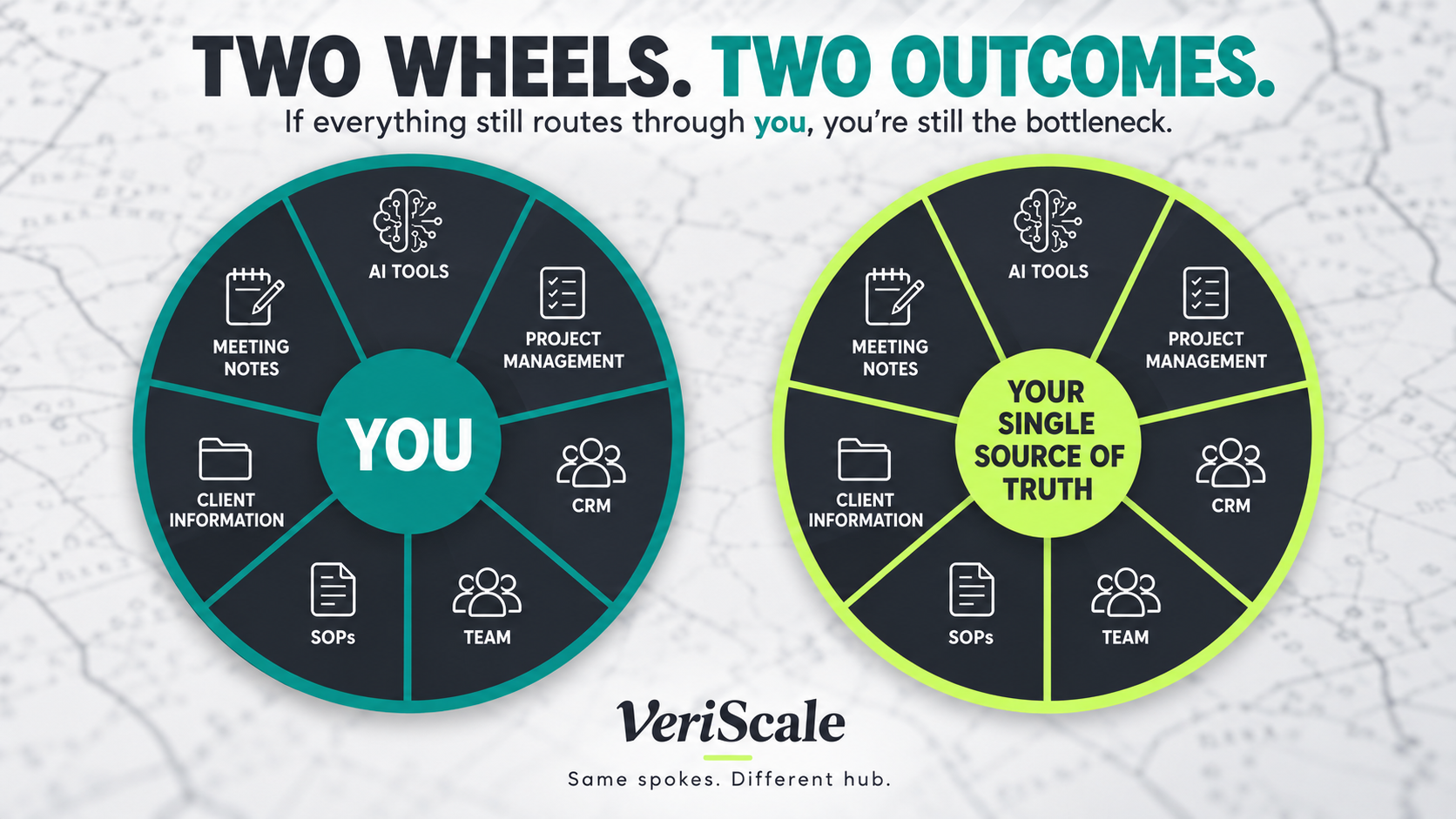
Put those decisions somewhere your team can find and update them. That’s what I mean by a single source of truth. A short example of a good handoff that everybody uses is worth more than a folder full of SOPs nobody can find. Compare that future with what you mapped in Step 3, then pick the one or two gaps that matter most this quarter. If you want to see how I organize that information in my own business, here’s the CEO operating system I use on the road.

5. Make Execution Inevitable
“Handle invoicing” sounds clear until the signed change order is missing. Can your billing lead call the customer? Can they correct the amount? When should they come to you?
I use an ownership agreement to get specific about five things: outcome, context, measures, process, and permission. For example: “Send invoices within one business day of job completion. The crew logs completion and attaches the signed paperwork. If something’s missing, go straight to the crew lead. Bring me disputed charges, not routine corrections.”
Then let them do it. If you jump in every time someone takes a different route to the same result, they learn to wait for you.
6. Measure & Adjust
Pick a few numbers that tell you whether the change is working. For billing, start with the percentage of completed jobs that arrive with all their paperwork and the time from completion to invoice. The first tells you where you can intervene. The second tells you whether the handoff actually got faster.
Look at the numbers weekly. If invoices are still late, ask the person who owns that outcome what they see in the numbers, where they’re getting stuck, and what they plan to change. Help remove a constraint they can’t clear on their own. You don’t have to take the job back. Adjust the process when the evidence warrants it. You don’t need a dashboard with 40 numbers. You need enough information to coach without chasing everyone for updates.
Start with the work you’re tired of chasing
My husband and I ran a service and installation business. Before we had AI tools, we got to a point where we could take trips that lasted weeks. That took changing how the business ran and what our team could handle without us. It didn’t happen because we got faster at answering messages.
This week, track the work that keeps coming back to you. Pick one repeat handoff, follow a real job through it, and write down what the team would need to own the next move. Start there.
If you’re not sure where the business depends on you most, take the free Founder Dependency Audit. If you already know what keeps landing back on your plate and want help changing it, see The CEO Shift.
